L4
Interface
The part people actually touch. Fast, accessible, and built to survive a bad network.
- Next.js
- React
- TypeScript
- Server-first rendering
- i18n & RTL
> whoami
Entrepreneur · CTO · Cyber Security
I build systems that hold up — then I try to break them.
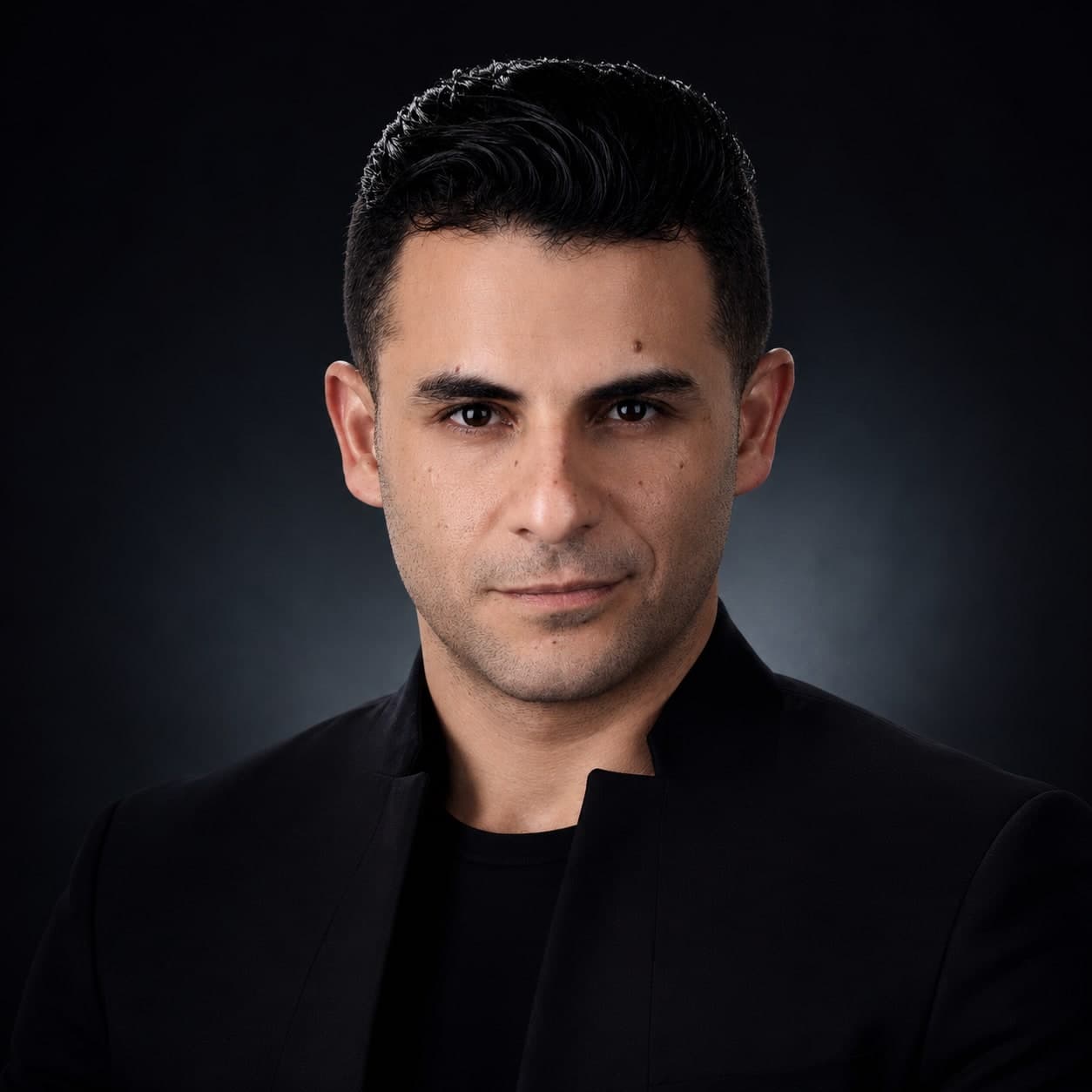
Fifteen years, five companies, and one half of the work most builders leave until last.
Fifteen years in startups, and every one of them with my hands in the code. I founded Cosmos Technologies, Jobatak and Cosmos Community, and I hold the CTO seat at Edura and Aggarly. The part of the job I have never delegated is the architecture itself.
What that means in practice is owning the decisions that are expensive to reverse — where the boundaries between systems fall, who holds identity, what an attacker actually reaches when one service gives way — and then making those decisions impossible to drift away from. A domain layer the build rejects if it imports a framework. An identity provider we run rather than rent. Encryption designed so the algorithm can be replaced without touching the data. Architecture that exists only in a document is not architecture.
The other half is security, and it came the long way round: a Master's from Cairo University and four years inside the Egyptian Center for Combating Terrorism. Spend that long on how systems come apart and the order of the work changes — threat model first, features after. It is why the layers below read from the bottom up.
The tools matter far less than where the boundaries between them fall — but people ask, so here they are, bottom-up. Security is the bottom layer because that is where I start.
The part people actually touch. Fast, accessible, and built to survive a bad network.
Where the business logic lives. Clear boundaries, honest data models, no clever tricks.
What it all runs on. Reproducible environments, real pipelines, and a way back when something breaks.
The layer most teams bolt on last. I start here — threat model first, features after.
Layers are only worth as much as the rules that keep them apart. These are the practices that enforce them — and the reason a codebase can still be changed safely two years in.
Eight years of it: four inside the Egyptian Center for Combating Terrorism, the rest consulting for companies that wanted the gap found before someone else found it. Here is what that adds up to in practice, rather than on a certificate.
The only honest way to know whether something holds is to attack it. Scoped, authorised, and written up so your engineers can act on it on Monday.
After an incident the questions are always the same: what happened, when, and what left the building. Answering them takes evidence, not guesses.
This is where the counter-terrorism years actually went. Tracing an actor across what they left behind is a different discipline from securing a server, and it changes how you read every system afterwards.
Everything above is only useful if it changes the system. This is the part that does: closing what was found, then making sure the next one is noticed early.
People usually arrive with one of three problems.
You have something to build and no team to build it. I take it from an empty repository to a product running in front of real users, with the architecture decided on purpose rather than by accident.
You have something already running and you are not certain it would survive someone trying. I go through it the way an attacker would, then harden what needs hardening.
You have engineers but nobody holding the technical direction. I take that seat part-time: architecture, hiring, delivery — so you can stay on the business.
I cannot publish client work, so here is the next best thing: describe what you have built and watch the first pass run.
Describe what you have built. You will get back the same first pass I run before I touch anyone's system: the entry points, the risks that actually apply to your stack, and what a paragraph of text cannot tell either of us.
Where all of it happened, most recent first.
The part you can verify.
Education
Certifications
Languages
I work through ideas in public, on YouTube.
If any of this maps to what you are building, write to me. I read every message myself.